Building Financial Confidence Through Tangible Learning
Enabling children to build financial literacy by pairing hands on learning with a companion app that connects physical money and value to digital transactions.
Collaborative project at the Korea Advanced Institute of Science and Technology (KAIST) working with Korean and other international design students.

Collaboration with NH Bank

2025 IF Design Award Winner
Duration
15 weeks
Team
Hoyeon Lee
Hyeonseok Lee
Sunwook Kim
Punn Lertjaturaphat
Responsibilities
UX/UI Design
User Research
Branding

Opportunity
Financial habits form early, but Korean youth aren't being equipped to build good ones. High school students scored 46.8 out of 100 on the 2023 Youth Financial Literacy Survey, below the passing benchmark of 60.
Result
A physical piggy bank device paired with a companion app that immerses children in hands-on learning while strengthening their ability to connect physical currency with digital transactions.
01
App
A companion app that fosters thoughtful spending and saving by guiding children through setting goals, visualizing their money, and encouraging conversations between kids and parents.


02
Piggy Bank
A connected piggy bank that grounds savings in something kids can touch and watch grow, further bridging digital transactions and physical currency.

03
Discovery
Combination of desk research on habit formation, tangible learning, and financial trends with primary research through surveys and interviews with parents in South Korea to uncover key behaviors, needs, and attitudes around money habits and digital use.
77th out of 142
South Korea ranks in financial literacy
84%
high schoolers have their own bank account
90%
of transactions in South Korea are cashless
Money behaviors are largely set by age 7. By the time a teenager is swiping a card, the patterns are already in place. To make a meaningful difference, the focus had to shift earlier, to the moment before habits form instead of after.

With the rise of digital money and its adoption among younger users, there is an increasing need for guidance that builds lasting money management skills
Survey participants
Participants interviewed
Hours of interviews
Pain Points

Digital disconnect
Digital money feels invisible and infinite, making it hard for children to track balances or feel the value of what they spend.

Poor spending
Children struggle to tell wants from needs, and often develop poor spending habits when given money with no guidance

Saving neglect
Kids rarely build a habit of saving and don't see the purpose of long-term saving or how a savings account works
How Might We…

Design Goals

Bridge physical and digital money
Help children understand the value of digital money by making it visible and interactive.

Build healthy habits
Encourage thoughtful saving and spending by making financial decisions engaging, rewarding, and easy to practice over time.

Encourage conversation
Create opportunities for children and parents to discuss money together, supporting financial education through shared experiences and ongoing dialogue.
04
Exploration
Focused on interactive features that bridge physical and digital money, habit-forming experiences that make saving and spending engaging, and collaborative touchpoints that encourage conversations between children and parents.


05
Branding
The goal of branding was to feel playful and encouraging, helping children build confidence around money through hands-on play and visual feedback.

06
App Features


Wallet
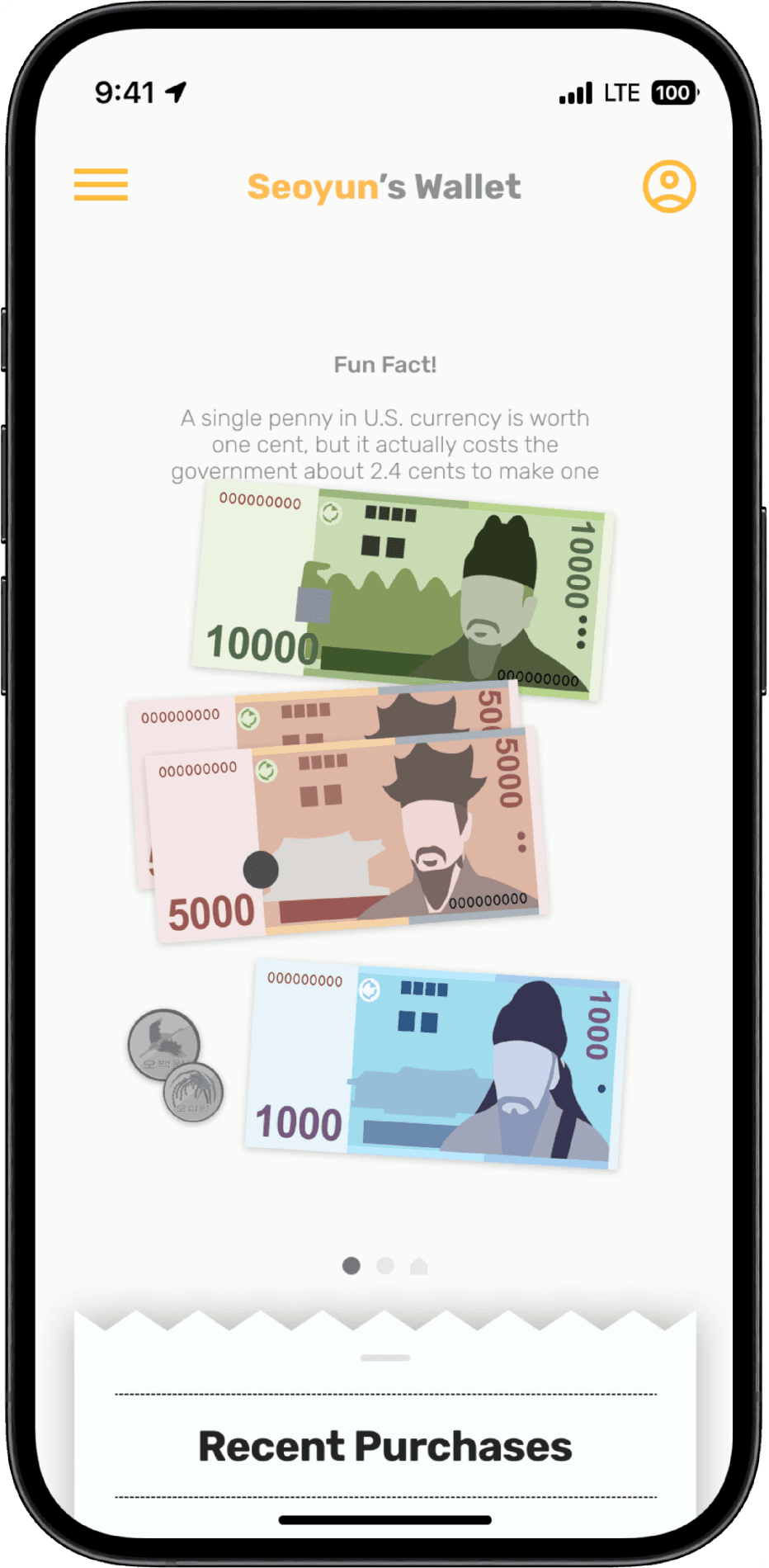
Filled with draggable bills and coins representing the amount the child currently has in their bank account.
Balance Information
Displayed on the card is the amount in the child’s account and how much of their daily limit is remaining to be used


Interaction with Bills and Coins
Bills and coins can be combined or split to represent different amounts, helping children see how smaller and larger values relate to one another.
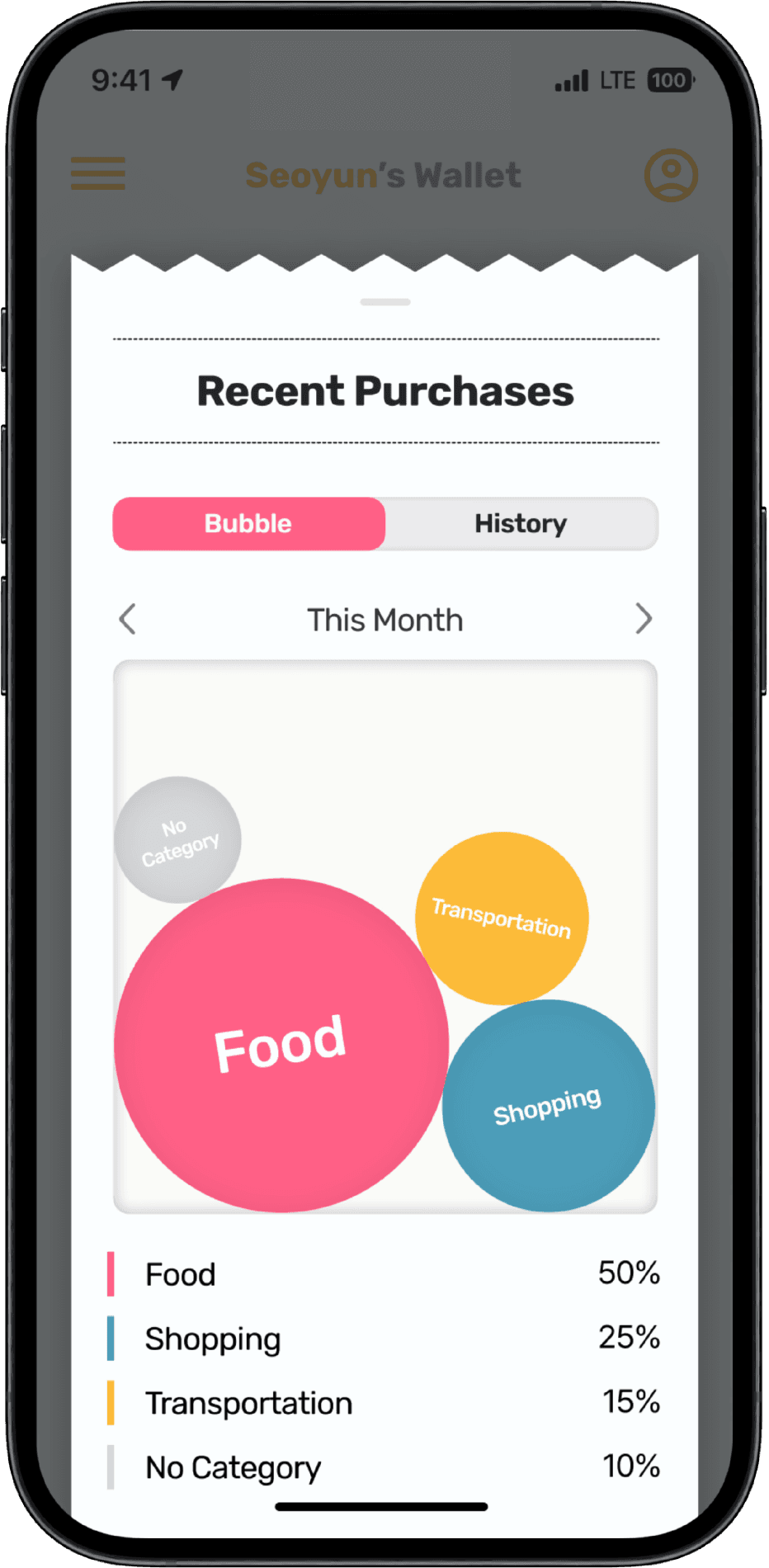
Purchase history
Can easily find any recent transactions and has the ability to filter by week, month, and year.


Savings Goal
Set specific savings goals, then physically deposit money into a piggy bank as a way to practice financial restraint.


Parent's UI
Parents are able to easily track their child’s spending and send money.